
The Rise of AI in Dental Exams
AI is changing how dentists diagnose and treat patients. Early applications involved computer-aided diagnosis for X-rays, but deep learning has advanced the field rapidly.
AI tools augment dentists' skills, offering a second opinion to identify subtle issues. The aim is better accuracy, efficiency, and patient care.
Early AI in dentistry focused on automated image analysis but was limited by computing power and data. Today, deep learning models trained on vast image datasets identify patterns with high accuracy. Patient acceptance is growing with education and transparency about improved health outcomes.
Explaining AI's benefits, such as earlier detection and less invasive treatment, builds trust. AI enhances, rather than replaces, the human touch in dentistry.

Decoding AI Diagnostic Tools
Dental AI diagnostic tools often use deep learning, a type of AI with multi-layered neural networks. Convolutional neural networks (CNNs) are effective for image analysis, mimicking the human visual cortex.
AI systems train on thousands of labeled dental images to identify patterns associated with conditions. This process requires significant computational power and curated datasets.
AI effectively detects cavities earlier than traditional methods. It analyzes X-rays for periodontal disease, measuring bone loss and inflammation. Research is also exploring AI for early oral cancer detection and identifying subtle bone structure changes that may indicate other health issues.
These AI tools show promise in improving diagnostic accuracy and potentially reducing the need for invasive procedures.
AI vs. Traditional Diagnostic Accuracy in Dentistry (2026 Outlook)
| Condition | Traditional Method Accuracy | AI Method Accuracy | Notes |
|---|---|---|---|
| Cavity Detection | Medium | High | AI algorithms, particularly those utilizing optical coherence tomography (OCT) and deep learning, demonstrate improved sensitivity in detecting early-stage caries not always visible with traditional visual and radiographic examinations. |
| Periodontal Disease Assessment | Medium | Medium to High | Traditional assessment relies heavily on clinical probing and radiographic bone loss evaluation. AI-powered systems analyzing radiographs and potentially integrating with patient data show promise in more accurately staging periodontal disease and predicting progression. |
| Oral Cancer Screening | Low to Medium | Medium | Visual examination remains the primary screening method, often limited by early-stage subtlety. AI tools analyzing visual data (e.g., from intraoral cameras) can assist in identifying suspicious lesions, but require validation and are not replacements for biopsy. |
| Fracture Identification | Medium | High | Radiographic analysis is standard, but can miss hairline or non-displaced fractures. AI analyzing cone-beam computed tomography (CBCT) scans can enhance fracture detection, especially in complex cases. |
| Periapical Lesions | Medium | Medium to High | Identifying subtle periapical changes on radiographs can be challenging. AI algorithms are being developed to improve the detection of these lesions, potentially leading to earlier endodontic intervention. |
| Resorption Assessment | Medium | Medium | AI can aid in quantifying and monitoring internal and external root resorption, providing more objective measurements than traditional visual assessment of radiographs. |
| Soft Tissue Abnormalities | Low to Medium | Medium | AI-powered image analysis can assist in identifying subtle changes in soft tissues that may indicate pathological conditions, though clinical correlation is crucial. |
Illustrative comparison based on the article research brief. Verify current pricing, limits, and product details in the official docs before relying on it.
What AI Can’t (Yet) Replace
Despite the impressive advancements in AI, there are still many aspects of dentistry that require human expertise. AI excels at pattern recognition but struggles with complex case planning, which requires synthesizing a patient’s overall health, medical history, and preferences for nuanced judgments.
Human interaction is essential for patient communication, including explaining diagnoses, discussing treatment options, and addressing fears with empathy. AI cannot build the same trust and rapport as a human dentist.
Dentists follow ethical codes prioritizing patient well-being, a capability AI lacks. Unexpected findings require immediate clinical judgment. Training data bias can lead to inaccurate diagnoses for certain demographics, making ongoing validation essential.
AI is a tool best used to assist dentists, not replace them. The human element remains vital.
Finding AI-Enabled Dental Practices
To find a dentist using AI, check their website for mentions of specific AI diagnostic tools or technologies. Practices often highlight innovation.
During a consultation, ask dentists about their AI tools, integration into workflows, and how they ensure accuracy and reliability. Inquire about validation and safeguards.
Meet My Dentist is adding an AI adoption filter to its platform, allowing users to easily find local dentists using advanced AI technologies and specific AI tools.
undefined's important to check with your insurance provider to determine if these exams are covered. I expect costs to come down as the technology becomes more widespread.
Questions to Ask Your Dentist
- What AI-powered tools are currently integrated into your diagnostic process? Understanding the specific technologies used provides insight into the level of AI adoption.
- How does AI assist in detecting conditions like cavities, gum disease, or oral cancer compared to traditional methods? This clarifies the practical benefits of AI implementation.
- What specific data is used to train the AI algorithms employed in your practice? Knowing the data sources can help assess the reliability and potential biases of the AI.
- How does AI improve the accuracy of dental examinations and reduce the potential for missed diagnoses? This focuses on the core value proposition of AI in diagnostics.
- What is the role of a dentist in reviewing AI-generated findings? It’s crucial to understand that AI is a tool to *assist* dentists, not replace them.
- What data privacy measures are in place to protect my dental records when using AI-powered diagnostics? This addresses important concerns about data security and patient confidentiality.
- Are the AI systems used regularly updated and validated to ensure continued accuracy and effectiveness? AI models require ongoing maintenance to remain reliable.
Cost & Insurance Coverage
Let's be realistic about the financial side of AI-powered dental diagnostics. As of late 2026, the cost of an exam incorporating AI can range from $100 to $300, depending on the practice and the specific technology used. This is typically a $20-$75 increase compared to a standard exam without AI assistance. However, these numbers are subject to change as the technology matures and becomes more accessible.
Insurance coverage varies significantly. Many major insurance providers are beginning to recognize the value of AI in early detection and preventative care, and are starting to include coverage for AI-enhanced exams. However, it’s crucial to verify coverage with your specific insurance plan before scheduling an appointment. Don’t assume it’s covered—call and ask.
Whether the added cost is justified depends on your individual circumstances. If you’re at high risk for cavities or periodontal disease, the earlier detection offered by AI could potentially save you money in the long run by preventing more extensive (and expensive) treatment. It’s also worth considering the peace of mind that comes with a more accurate and comprehensive diagnosis.
The Future of AI Dentistry
Looking ahead, the future of AI in dentistry is incredibly promising. We can expect to see the development of AI-powered personalized treatment plans, tailored to each patient's unique needs and risk factors. Imagine AI analyzing your genetic information, lifestyle habits, and dental history to create a customized preventative care regimen.
Robotic surgery is another area with significant potential. Robots can perform complex procedures with greater precision and accuracy than humans, potentially leading to faster healing times and better outcomes. Remote monitoring of oral health, using wearable sensors and AI-powered analysis, could allow dentists to track patients’ progress between appointments and intervene early if problems arise.
However, there are also challenges to overcome. Data security is a major concern, as dental records contain sensitive personal information. Ensuring the privacy and confidentiality of this data will be paramount. Ongoing training for dental professionals is also essential, as they need to be able to effectively use and interpret the results of AI-powered tools.
Despite these challenges, I am cautiously optimistic about the future of AI in dentistry. I believe that AI has the potential to revolutionize oral health care, making it more accessible, affordable, and effective for everyone.
Top AI-Powered Dental Tools (2026)
Here are some of the leading AI-powered dental tools available as of 2026, used by dentists to enhance diagnostics and treatment planning:
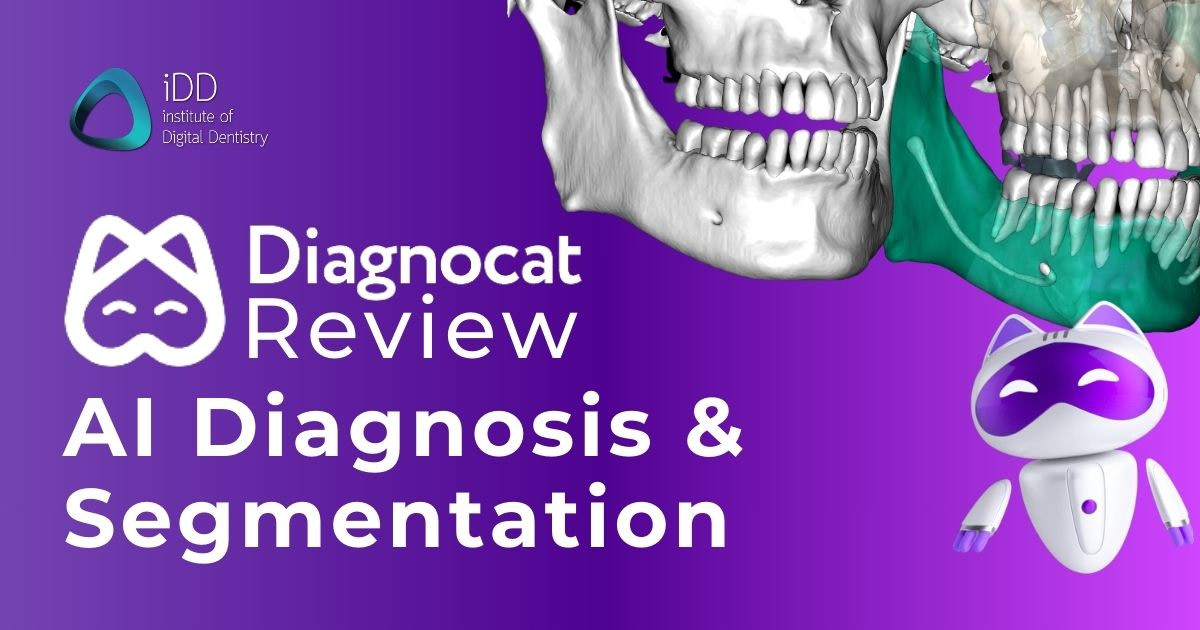
Diagnocat (diagnocat.com): This platform uses deep learning to automatically detect and analyze cavities, fractures, and other dental anomalies in X-rays. It’s known for its high accuracy and ease of use, integrating seamlessly into existing dental workflows. It’s targeted towards general dentists and orthodontists.
Pearl (pearl.ai): Pearl’s AI platform assists with second opinion analysis of radiographs, identifying potential issues like periapical lesions, internal root resorption, and anatomical variations. It’s aimed at endodontists and general dentists looking for an extra layer of diagnostic confidence.
Overjet (overjet.com): Overjet focuses on automating insurance claim reviews and providing insights into patient treatment needs based on X-ray analysis. It’s primarily used by dental support organizations and group practices to improve efficiency and accuracy.
VideaHealth (videahealth.com): VideaHealth provides AI-powered diagnostics for a range of dental conditions, including caries, periodontal disease, and bone loss. They emphasize their focus on clinical validation and integration with existing dental software. It is aimed at general dentistry practices.
Carestream CS Detect (carestreamdental.com/en/dental-solutions/technology/cs-detect): This tool is an AI-powered software that assists in detecting caries and periapical lesions in radiographs. It is designed to help dentists improve diagnostic accuracy and reduce errors.
Featured Products
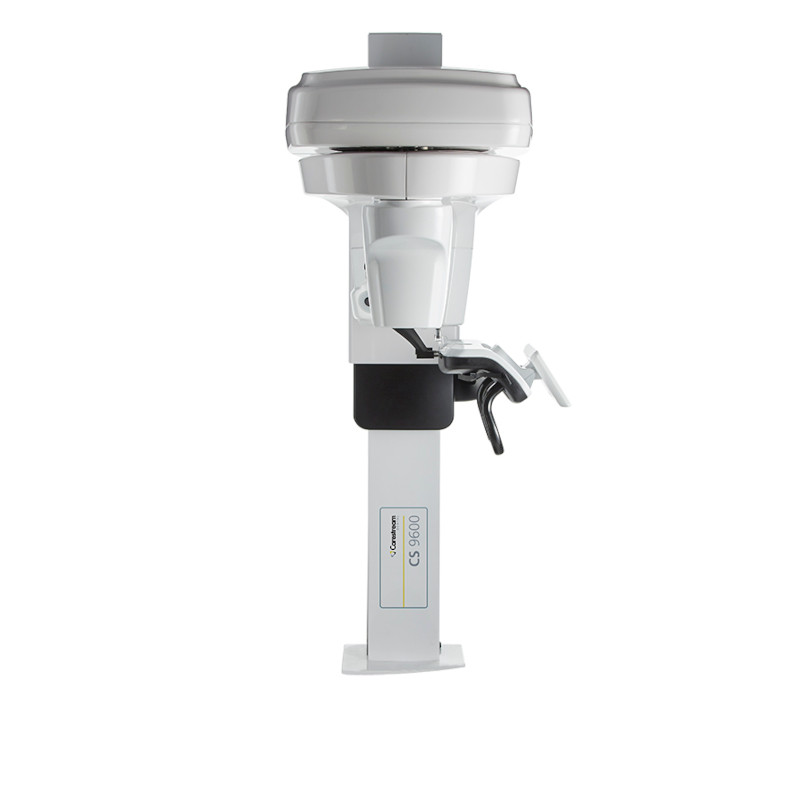
High-resolution 3D imaging · Versatile imaging modes · Intuitive user interface
The Carestream Dental CS 9600 CBCT offers exceptional image quality and versatility, providing the detailed anatomical data essential for AI-driven diagnostics.
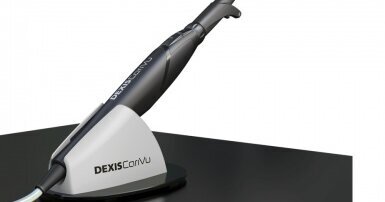
Non-ionizing imaging technology · Early caries detection · Visual representation of demineralization
DEXIS CariVu's unique transillumination technology allows for early and accurate detection of cavities, complementing traditional X-rays for comprehensive AI analysis.

Effective surface cleaning · Suitable for spa surfaces · Pleasant scent
Sirona Quick Gloss Spa Surface Cleaner ensures a clean and hygienic environment, a fundamental requirement for any dental practice utilizing advanced diagnostic equipment.

Multi-functional 3D imaging · Wide range of field of view options · Advanced image processing
The Planmeca ProMax 3D Plus provides comprehensive imaging capabilities, from panoramic to CBCT, generating the detailed datasets needed for sophisticated AI diagnostics.

High-definition digital intraoral imaging · Portable X-ray sensor · Veterinary specific design
This veterinary digital X-ray sensor captures high-quality intraoral images, crucial for detailed analysis by AI diagnostic systems in animal dental care.
As an Amazon Associate I earn from qualifying purchases. Prices may vary.

No comments yet. Be the first to share your thoughts!