

The Rise of AI in Dental Checkups
Artificial intelligence in dentistry once conjured images of robotic arms. While those advancements are still developing, the current revolution is in diagnostics. We're seeing a shift from traditional methods to AI systems that detect issues with greater accuracy and speed. This isn't about replacing dentists; it's about giving them powerful tools.
AI adoption in dental practices is growing, though not yet ubiquitous. Anecdotal evidence from industry conferences and early adopters suggests a steady increase. Patient acceptance is also rising as people recognize the benefits: earlier detection, less invasive treatments, and personalized care. It's a move toward precision dentistry, happening quickly.
This isn't a distant future concept. AI is used today to analyze dental X-rays, scan mouths for early disease signs, and predict patient risk for certain conditions. The technology evolves rapidly, and its potential to improve quality dental care is substantial. Finding a dentist who uses these technologies offers an advantage for your oral health.
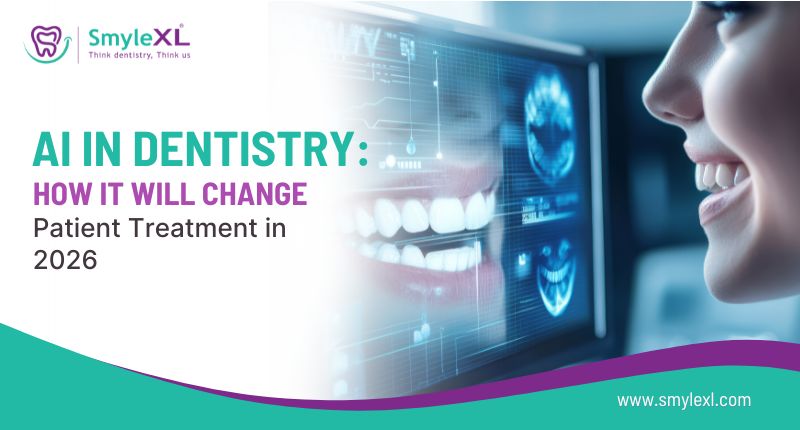
AI-Powered Diagnostics: What Can It Detect?
AI excels at pattern recognition, making it effective in dental diagnostics. A common application is detecting early-stage caries (cavities). Traditional X-rays can miss small cavities, but AI algorithms analyze images with greater sensitivity, identifying decay before it becomes a major problem. This means smaller fillings and less discomfort.
Beyond cavities, AI is invaluable in identifying periodontal disease (gum disease). The technology assesses gum tissue and bone levels with a precision difficult for the human eye to achieve consistently. Oral cancer screening is another critical area where AI makes a difference. Algorithms analyze mouth images to identify subtle anomalies that might indicate cancerous or pre-cancerous lesions.
The process involves feeding a large dataset of images – X-rays, intraoral scans, photographs – into an AI system. The system learns to recognize patterns associated with different conditions. It's not perfect. AI can be less reliable with poor-quality images or limited training data for specific demographics. It's a tool that requires careful use and interpretation by a skilled dental professional. The Dental Board of California (dbc.ca.gov) oversees licensing and monitoring of dental professionals, ensuring standards are met, even with new technologies.
Finding Dentists Equipped with AI Technology
AI implementation in dental practices varies. Some practices have invested in comprehensive AI diagnostic suites, while others use AI-assisted tools for specific tasks, like X-ray analysis. There isn't a central registry of 'AI-equipped' dentists, so finding a dentist who uses these technologies requires detective work. Start by visiting the dentist’s website; many practices now highlight their use of advanced technology.
Look for descriptions mentioning specific AI tools or technologies – for example, AI-powered X-ray analysis software or intraoral scanners. Ask directly when scheduling an appointment. A simple question like, 'Do you utilize any AI-assisted diagnostic tools?' provides valuable information. Ask for specifics about what the technology does and how it benefits patients. Websites like Meet My Dentist (meetmydentist.com) can help you find a dentist in your area, and then investigate their offerings.
Remember that 'AI-equipped' doesn't automatically mean 'best'. A dentist’s skill, experience, and patient care philosophy are still most important. AI is a tool to enhance their abilities, not replace them. Consider it one factor among many when choosing a dentist and prioritizing quality dental care.
- Check the dentist's website for mentions of AI technology.
- Ask directly about AI-assisted diagnostics when scheduling.
- Inquire about specific tools and their benefits.
Decoding the Tech: Common AI Tools You'll Encounter
Several AI technologies are becoming common in dental practices. Intraoral scanners create detailed 3D models of your teeth and gums, eliminating messy impressions. AI algorithms can analyze these scans to detect subtle changes or anomalies. My Dentist in Plano (mydentistinplano.com) uses these advanced technologies.
AI-powered X-ray analysis software is another key tool. These systems automatically detect cavities, bone loss, and other issues that might be missed by the human eye. They quantify the severity of these problems, allowing dentists to track changes over time. This is a huge step up from purely visual interpretation of X-rays.
Finally, some practices use comprehensive diagnostic platforms that integrate data from multiple sources – X-rays, scans, patient history – for a holistic assessment of your oral health. These platforms use machine learning algorithms to identify patterns and predict potential problems. The goal isn't to replace the dentist's judgment, but to provide them with more information for informed decisions.
Cost Considerations: Does AI Raise Dental Bills?
Cost is naturally on many patients’ minds. Treatment with AI-assisted diagnostics might be more expensive initially, as practices recoup investment in these technologies. However, consider the long-term benefits. Earlier detection of problems often leads to less invasive and less expensive treatments. A small filling detected early is far cheaper than a root canal needed later.
undefinedgrandprairie.com) are highly trained and passionate about providing affordable Dental Care Services.
Ultimately, the value of AI lies in its potential to improve the accuracy and effectiveness of dental care. While there may be an upfront cost, it could save you time, money, and discomfort in the long run.
AI and the Future of Preventative Dentistry
AI has the potential to revolutionize preventative dentistry. Imagine a future where your dentist can create a personalized risk assessment based on your genetic predisposition, lifestyle factors, and oral health history. AI algorithms could analyze this data to predict your likelihood of developing cavities, gum disease, or other conditions.
This would allow for tailored oral hygiene plans designed to address your specific needs. Remote monitoring is another exciting possibility. AI-powered sensors in your toothbrush or mouthguard could track your brushing habits, detect early signs of disease, and alert your dentist to any concerns. Teledentistry, powered by AI, could allow for remote consultations and monitoring, making dental care more accessible to people in remote areas or with limited mobility.
In 5-10 years, a dental visit might involve a comprehensive scan of your mouth, an AI-powered analysis of your risk factors, and a personalized preventative plan. The focus will be on preventing problems before they start, rather than just treating them after they develop. It's a proactive, data-driven approach to oral health that promises to be more effective and efficient.
Top AI-Powered Dental Tools Currently Available
The market for AI-powered dental tools is rapidly expanding. Here are a few standouts currently available to dental professionals. It’s worth noting that pricing can vary significantly depending on the vendor and specific features.
Diagnocat: This software utilizes AI to automatically detect and analyze anomalies in dental X-rays, including cavities, bone loss, and periodontal disease. It aims to improve diagnostic accuracy and reduce interpretation time. Pricing is typically subscription-based, starting around $500/month.
Pearl: Pearl’s AI platform offers a range of tools, including lesion detection, root canal analysis, and implant planning. It integrates with existing dental imaging systems and provides real-time insights to dentists. Subscription costs can range from $800 to $2000+ per month depending on the modules selected.
Overjet: Overjet focuses specifically on AI-powered X-ray analysis, helping dentists identify and prioritize cases requiring attention. It can also automate insurance pre-authorization processes. Pricing is customized based on practice size and usage.
SOTA Imaging: SOTA provides AI-powered dental diagnostic tools that analyze X-rays and intraoral scans to detect caries, periodontal disease, and other anomalies. They offer a cloud-based platform with subscription plans starting around $600/month.
Dental Intelligence: This platform uses AI to analyze patient data and identify opportunities for improving practice efficiency and patient care. It includes features for appointment scheduling, treatment planning, and insurance claim processing. Pricing varies based on the number of users and features.
Featured Products

Analyzes dental images (X-rays, CT scans) to identify potential diseases. · Utilizes AI algorithms for enhanced diagnostic accuracy. · Assists dentists in detecting early signs of dental conditions.
This tool directly supports enhanced diagnostic accuracy by leveraging AI to interpret dental imagery for disease detection.

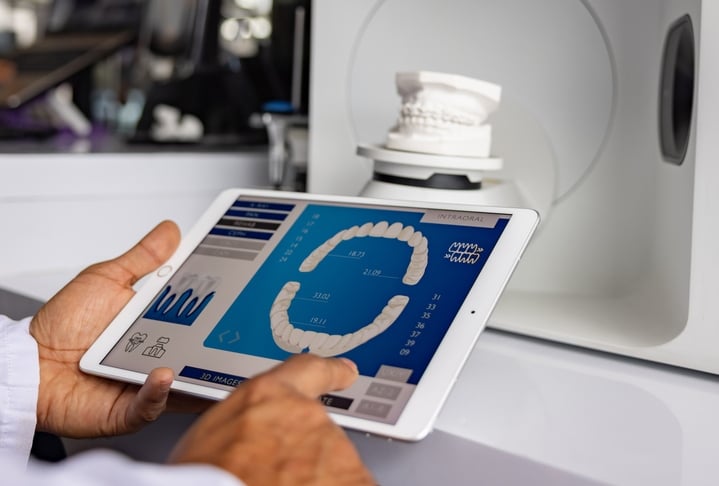
Captures high-resolution 3D digital impressions of teeth and oral structures. · Streamlines the process of creating dental models for restorations and orthodontics. · Compatible with iOS devices for convenient use in dental practices.
This intraoral scanner represents advanced technology that streamlines workflows and enables more precise patient care through digital impressions.
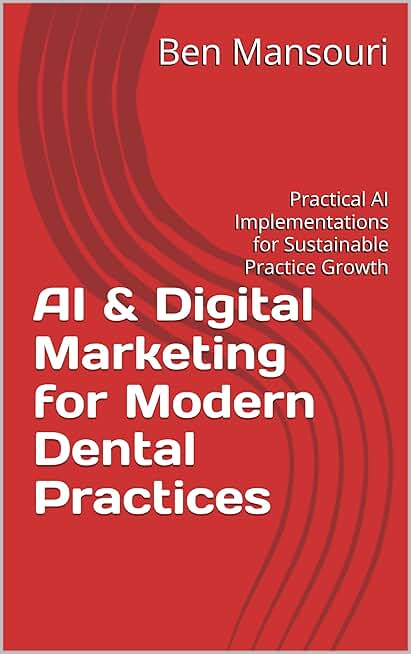
Provides practical guidance on integrating AI into dental practice marketing strategies. · Focuses on sustainable growth through effective digital marketing. · Explores AI applications for patient engagement and practice management.
This resource offers insights into how AI can be applied to practice growth and patient engagement, aligning with the article's theme of advanced technology adoption.

Explores the transformative impact of AI on dental diagnosis and patient care. · Discusses the evolving role of dentists in an AI-integrated future. · Examines how AI can enhance the precision and efficiency of dental treatments.
This book delves into how AI is redefining dental diagnosis and care, directly addressing the core topic of the article.

Offers a practical guide to applying machine learning and generative AI for data analysis. · Focuses on using AI to improve decision-making processes. · Covers fundamental concepts and real-world applications of AI in analytics.
This guide provides foundational knowledge on AI data analytics, which can empower dentists to make better, data-driven decisions for their practices.
As an Amazon Associate I earn from qualifying purchases. Prices may vary.


No comments yet. Be the first to share your thoughts!