
The Rise of AI in Dental Checkups: What’s Changing?
For years, the idea of artificial intelligence in dentistry felt like something from a science fiction movie. Now, it’s rapidly becoming a reality, and it’s more about evolution than revolution. We’re not talking about robots performing root canals anytime soon. Instead, AI is emerging as a powerful tool to assist dentists in providing more accurate diagnoses, creating more effective treatment plans, and even focusing on preventative care. It’s a shift in how dentists work, and it’s already happening.
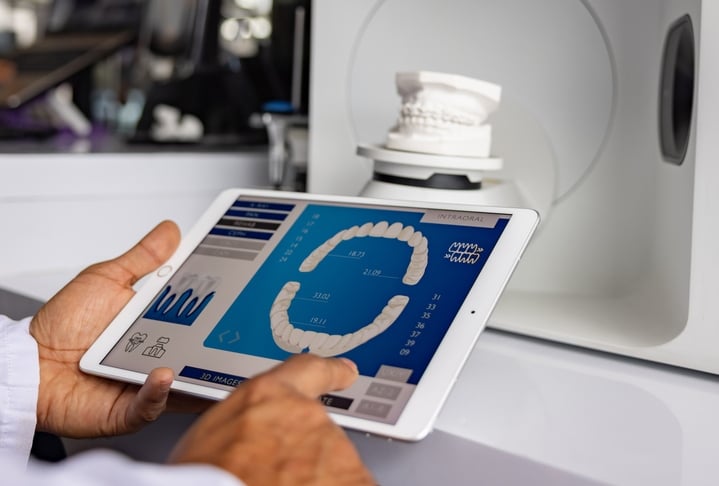
The core of this change lies in AI’s ability to analyze complex data – specifically, dental images. This isn't about replacing the trained eye of a dentist; it's about giving them a second, incredibly precise opinion. Traditional methods rely heavily on a dentist’s experience and visual assessment. AI algorithms, however, can detect subtle patterns and anomalies that might be missed, leading to earlier and more accurate diagnoses. This is particularly important in areas like detecting early-stage oral cancer or subtle bone loss.
Initially, there was understandable skepticism. Both patients and dentists questioned the reliability and trustworthiness of AI. Would an algorithm truly understand the nuances of oral health? But as AI technology has matured and demonstrated its accuracy in clinical settings, that skepticism is slowly giving way to cautious optimism. The key is recognizing that AI isn't meant to replace the dentist-patient relationship, but to enhance it by providing more information and improving the quality of care. It's about better tools, not robot dentists.

Urgent action is needed to rebuild NHS dentistry - I’ve heard far too many stories of my constituents going without treatment or driving for hours to find a dentist. Clarity must be given on how we will attract & keep new dentists in dental deserts such as Waveney Valley. pic.twitter.com/poCqm0BMIP
— Adrian Ramsay MP (@AdrianRamsay) October 21, 2025
Decoding AI Dental Diagnostics: What Can It Actually Detect?
Let’s move beyond the generalities and get into specifics. What can AI actually detect in a dental setting today? The most common applications revolve around analyzing dental images – x-rays, CBCT scans (cone-beam computed tomography), and intraoral photos. AI algorithms are particularly effective at identifying cavities, often detecting them earlier than traditional methods. This is because the AI can analyze subtle changes in tooth structure that might be invisible to the naked eye.
Beyond cavities, AI is proving valuable in diagnosing periodontal disease (gum disease). Algorithms can assess the health of the gums, identify areas of inflammation, and even predict the risk of future bone loss. A study published by PMC, “Artificial Intelligence: A New Diagnostic Software in Dentistry: A Preliminary Performance Diagnostic Study”, showcases the potential of AI in identifying various dental conditions, though it emphasizes the need for further research to validate its performance across diverse patient populations. The study demonstrated promising accuracy rates in detecting dental caries and periodontal issues.
Perhaps most importantly, AI is being used to aid in the detection of oral cancer. By analyzing images, AI can identify suspicious lesions or abnormalities that require further investigation. Early detection is crucial for successful treatment, and AI can play a vital role in improving survival rates. It’s important to remember these are assistive tools. A dentist always makes the final diagnosis.
Comparison of Traditional and AI-Assisted Dental Diagnostics
| Feature | Traditional Method | AI-Assisted Method |
|---|---|---|
| Cavity Detection | Relies on visual inspection and radiographic analysis; can be subjective. | Utilizes image analysis to identify subtle enamel lesions, potentially detecting cavities earlier and with greater consistency. |
| Periodontal Disease Detection | Primarily based on probing depths and radiographic bone loss assessment; operator dependent. | AI can analyze radiographs to quantify bone loss and identify early indicators of periodontal disease, potentially improving diagnostic accuracy. |
| Early Cancer Indicators | Often relies on visual examination of oral tissues; early detection can be challenging. | AI algorithms can be trained to identify subtle anomalies in oral tissues that might be indicative of cancerous or precancerous lesions, aiding in earlier detection. |
| Speed of Analysis | Can be time-consuming, particularly with detailed radiographic analysis. | AI-assisted analysis can significantly reduce the time required for diagnostic assessments. |
| Accuracy | Accuracy is heavily influenced by the experience and skill of the dentist. | Potential for increased accuracy and reduced inter-observer variability due to objective analysis. |
| Detection of Subtle Issues | Subtle changes may be missed during visual or standard radiographic examination. | AI’s image analysis capabilities can highlight subtle changes that might be overlooked by the human eye. |
| Cost | Generally lower upfront cost for equipment, but relies heavily on dentist time. | Higher initial investment in AI software and hardware, but potential for long-term cost savings through increased efficiency and potentially reduced need for extensive treatment due to earlier detection. |
Illustrative comparison based on the article research brief. Verify current pricing, limits, and product details in the official docs before relying on it.
Overjet and Beyond: Key Players in AI Dental Technology
Several companies are at the forefront of developing and implementing AI solutions for dentistry. One prominent name is Overjet. According to The Probe, mydentist has partnered with Overjet to roll out the largest dental AI platform in the UK. Overjet’s platform focuses on analyzing dental x-rays to detect and quantify areas of decay, fractures, and other anomalies, providing dentists with a detailed report to aid in diagnosis.
However, Overjet isn't the only player in this space. Several other companies are developing AI-powered tools for dental diagnostics and treatment planning. Diagnocat, for example, offers AI solutions for analyzing CBCT scans, providing detailed 3D visualizations and measurements. Pearl is another company focused on AI-powered dental diagnostics, with a platform that can detect a wide range of conditions, including cavities, periodontal disease, and oral cancer.
Each company approaches AI implementation differently. Some focus on specific diagnostic areas, while others offer more comprehensive solutions. It’s vital to remember that the technology is still evolving. It’s less about which company is “best” and more about finding a solution that meets the specific needs of a dental practice and enhances their ability to provide high-quality care.
Finding an AI-Enabled Dentist: What to Ask Before Your Appointment
You’re intrigued by the potential of AI in dentistry – excellent. But how do you find a dentist who is actually using these technologies? It’s not always immediately obvious. Don't assume every dentist advertising “advanced technology” is utilizing AI. A direct approach is best: ask questions. When scheduling an appointment or during a consultation, consider asking specific questions about their use of AI.
Here are some key questions to ask: “Do you use AI-powered diagnostic tools?” is a good starting point. Follow up with “What specific AI technologies do you employ?” and “How does AI impact the accuracy of your diagnoses?” Don’t be afraid to ask about the benefits for you as a patient: “How does using AI improve my care?” and “Does it mean earlier detection of problems?”. A dentist who is genuinely embracing AI should be able to answer these questions clearly and confidently.
It's also important to be a little skeptical. Some marketing materials might overstate the capabilities of AI. Verify that the dentist is actively using the technology and not simply advertising it. You could ask if they can show you examples of how AI has aided in your diagnosis or treatment plan. Ultimately, finding an AI-enabled dentist is about finding a practice that is committed to innovation and providing the best possible care.
- Do you use AI-powered diagnostic tools?
- What specific AI technologies do you employ?
- How does AI impact the accuracy of your diagnoses?
- How does using AI improve my care?
- Does it mean earlier detection of problems?
Cost and Insurance: Will AI Diagnostics Affect Your Bill?
Let's address the financial aspect. Will the use of AI in dental diagnostics lead to higher bills? The answer is… complicated. Currently, there isn’t a standard pricing structure for AI-assisted diagnostics. The cost can vary depending on the specific technology used, the dentist’s practice, and your location. I'm not sure if there's a universally noticeable difference in cost yet.
One argument is that AI can potentially reduce long-term costs by enabling earlier and more accurate diagnoses. This can prevent the need for more extensive – and expensive – treatments down the line. For example, detecting a small cavity early with AI might prevent the need for a root canal later. However, this is a long-term benefit and may not be reflected in your immediate bill.
The question of insurance coverage is also evolving. Currently, many insurance companies do not specifically cover AI-assisted diagnostics as a separate line item. However, they typically cover the underlying procedures (like x-rays and examinations) regardless of whether AI is used. As AI becomes more prevalent, it’s likely that insurance coverage will adapt, but the timeline is uncertain.
The Future of AI in Dentistry: What to Expect in the Coming Years
Looking ahead, the potential for AI in dentistry is substantial. We can anticipate advancements in personalized treatment planning, where AI analyzes a patient’s genetic data and medical history to create a customized treatment plan. Imagine AI predicting your risk for certain dental conditions before they develop, allowing for proactive preventative measures.
AI-powered robotic surgery is another area of potential growth, though it’s still in its early stages. Robots could assist dentists with complex procedures, improving precision and reducing invasiveness. Remote monitoring of oral health is also on the horizon, with AI-powered sensors and devices tracking changes in your mouth and alerting your dentist to potential problems. These sensors could be integrated into toothbrushes, mouthguards, or even smart mirrors.
However, it’s crucial to approach these predictions with a degree of caution. The development and implementation of these technologies will require significant research, regulatory approval, and ethical considerations. Data privacy, algorithmic bias, and the potential for job displacement are all important issues that need to be addressed.
Addressing Concerns: Data Privacy and the Human Touch
It’s perfectly natural to have concerns about sharing your sensitive dental data with AI systems. Data privacy is paramount, and dentists have a legal and ethical obligation to protect patient information. In the United States, the Health Insurance Portability and Accountability Act (HIPAA) sets strict standards for the privacy and security of health data, including dental records. Reputable AI companies and dental practices will comply with these regulations.
Beyond data privacy, many patients worry that AI will diminish the human element of dental care. Will dentists become overly reliant on technology and lose their ability to connect with patients on a personal level? The answer is a resounding no. AI is a tool to assist dentists, not replace them. The dentist’s expertise, empathy, and ability to build trust remain essential components of quality care.
Ultimately, AI is not about taking the "care’ out of healthcare. It"s about empowering dentists to provide more accurate, efficient, and personalized care. The human touch – the warmth, compassion, and understanding that a dentist provides – will always be irreplaceable. AI is simply a powerful tool to help dentists deliver that care even better.


No comments yet. Be the first to share your thoughts!