
The Rise of AI in Dental Exams
Dental exams have long relied on visual inspection, x-rays, and a dentist’s trained eye. Now, artificial intelligence is actively aiding diagnosis, moving beyond simply digitizing x-rays. This technology is already in use in dental offices across the UK and the US.
Traditional methods have limitations. Human error and subjectivity can lead to missed or delayed diagnoses. A dentist's interpretation of an x-ray can be affected by fatigue or experience. AI offers a consistent, objective second opinion.
Adoption rates are climbing. MyDentist's partnership with Overjet, a leader in dental radiography AI, shows this momentum. This rollout, the largest of its kind in the UK, brings AI-powered diagnostics to many patients. It signals an industry trend toward improving accuracy and speeding up diagnosis for better patient outcomes.
What AI Diagnoses Actually Look For
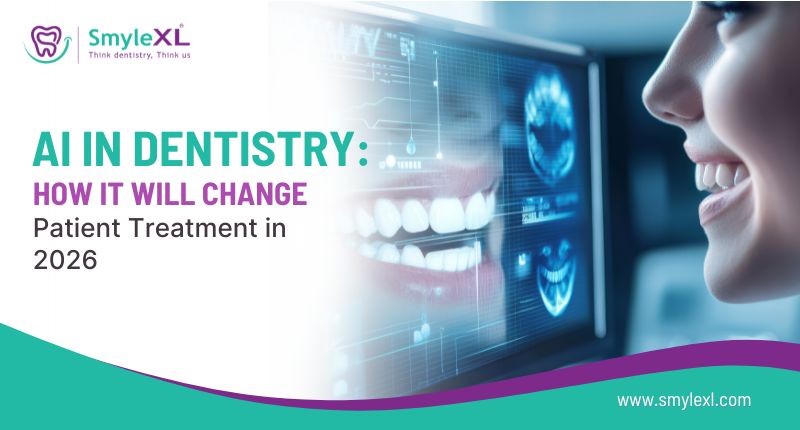
AI diagnostic tools augment dentists' abilities, not replace them. These systems excel at detecting specific dental issues, particularly caries (cavities). They accurately identify small cavities that might be missed during a visual exam.
AI also detects periapical lesions (inflammation around a tooth's root) and assesses bone loss, a factor in periodontal disease. These tools analyze radiographs for subtle patterns indicating these conditions. A study published by PMC shows AI's potential to improve diagnostic accuracy.
AI is also being explored for oral cancer screening. The technology analyzes images to identify suspicious areas needing further investigation. AI uses pattern recognition algorithms, trained on vast datasets of dental images, to recognize visual characteristics of different conditions. It identifies statistically significant patterns, not 'seeing' like a human.
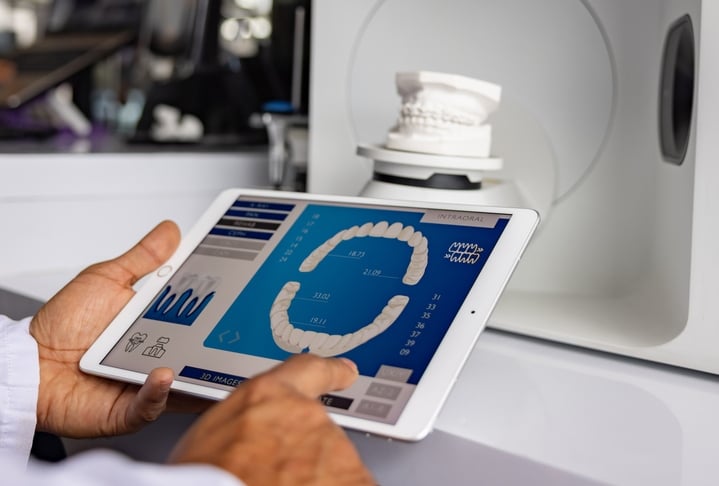
AI analyzes digital x-rays, cone-beam computed tomography (CBCT) scans, and intraoral images. The software highlights areas of concern for the dentist to review, acting as a second set of eyes. The dentist always makes the final determination.
Benefits Beyond Detection: Speed & Consistency
AI diagnostics offer benefits beyond identifying problems. Speed is a key advantage. AI can analyze a dental image in seconds, a task that might take a dentist several minutes during a busy appointment. This allows for faster diagnosis and treatment planning.
Consistency is also important. AI does not experience fatigue, bias, or performance fluctuations. It analyzes every image with the same scrutiny, regardless of the time of day or the dentist’s workload. This reduces the risk of missed diagnoses due to human error.
Faster, more accurate diagnosis leads to earlier detection of dental problems. Earlier detection often means less invasive treatment options. A small cavity detected early might only require a filling, whereas a more advanced cavity could necessitate a root canal. Treatment decisions are always individualized.
Traditional vs. AI-Assisted Dental Exams: A Comparative Overview (Projected for 2026)
| Criteria | Traditional Dental Exam | AI-Assisted Dental Exam |
|---|---|---|
| Speed | Similar | Higher |
| Accuracy (Initial Detection) | Similar | Potentially Higher - particularly for subtle anomalies |
| Cost | Similar | Potentially Lower - due to increased efficiency and earlier detection reducing need for extensive treatment |
| Accessibility | Similar | Potentially Higher - AI can facilitate remote consultations and preliminary assessments |
| Second Opinion Potential | Lower - reliant on specialist referral | Higher - AI provides a consistent, documented analysis for review |
| Detection of Caries | Similar | Potentially Higher - AI algorithms can be trained to identify early-stage caries often missed by the naked eye |
| Assessment of Periodontal Disease | Similar | Potentially Higher - AI can analyze radiographic images to detect subtle bone loss |
| Subjectivity of Diagnosis | Higher | Lower - AI provides a more objective, data-driven assessment |
Illustrative comparison based on the article research brief. Verify current pricing, limits, and product details in the official docs before relying on it.
Finding AI-Enabled Dental Practices
To find a dentist embracing this technology, start your search on Meet My Dentist. While a specific 'AI diagnostics' filter isn't available yet, use keywords like 'advanced technology,' 'digital dentistry,' or 'cone beam CT scan.' These practices are more likely to invest in AI tools.
When browsing dentist profiles, look for mentions of specific AI software, like Overjet, on their website or in practice descriptions. Many practices highlight their adoption of innovative technologies. Visit the dentist's website and look for a 'Technology' or 'Services' page.
When scheduling an appointment, ask directly if they use AI-powered diagnostic tools. Ask: 'Do you use AI to analyze my x-rays?', 'What type of AI software do you use?', and 'How does AI assist in my diagnosis?' This clarifies their capabilities. Meet My Dentist is working on adding more specific search filters.
Cost Considerations: Will AI Raise Prices?
Incorporating AI into dental practice may affect patient costs. Initially, the investment in AI software and training can be significant for dental practices.
Increased efficiency could offset these costs. Faster diagnosis and more accurate treatment planning could reduce repeat appointments and extensive procedures
Insurance coverage for AI-assisted diagnostics is currently variable. Some insurance providers may cover the cost of AI analysis as part of a standard x-ray exam, while others may not. It's best to check with your insurance provider directly to understand your coverage. It’s likely this will become more standardized as AI becomes more prevalent.
What About Data Privacy and Security?
The use of AI in healthcare, including dentistry, raises legitimate concerns about patient data privacy. It’s crucial that dental practices using AI adhere to strict data security protocols, including HIPAA compliance in the United States.
AI companies handling patient data should have robust security measures in place to protect against unauthorized access and data breaches. Patients should inquire about these measures when choosing a dentist who utilizes AI. Reputable AI providers will be transparent about their data handling practices.
As a patient, you have the right to understand how your data is being used and protected. Don't hesitate to ask your dentist about their data privacy policies and the security measures they have in place. You should also be aware of your rights under HIPAA and other applicable privacy regulations.
AI Tools Dentists Are Using Now
Several AI-powered tools are currently available to dentists, each with its own strengths and capabilities. Overjet, as mentioned earlier, is a prominent player in the field. It specializes in analyzing dental radiographs to detect caries, periapical lesions, and bone loss. The mydentist partnership demonstrates Overjet’s growing influence.
Overjet’s software aims to provide dentists with a second opinion, highlighting areas of concern on x-rays and helping to improve diagnostic accuracy. It's designed to integrate seamlessly into existing dental workflows, making it easy for dentists to adopt. Their website details specific use cases and features.
Other AI tools are emerging, focusing on different aspects of dental care. Some companies are developing AI-powered systems for periodontal disease diagnosis, while others are working on tools for oral cancer screening. Pearl AI is another company offering a range of AI-powered dental solutions, including second opinion software and treatment planning tools.
It’s important to remember that the field of AI in dentistry is rapidly evolving. New tools and technologies are constantly being developed. As a patient, you don't necessarily need to know the specific brands, but understanding that AI is being used to enhance your care is the key takeaway.
Featured Products

Personalized coaching with AI-powered app · 76,000 brush movements per minute · Pressure sensor with visual feedback
This advanced electric toothbrush offers personalized coaching through its AI-powered app, providing real-time feedback to optimize your brushing technique.

App-guided brushing with real-time feedback · SenseIQ technology automatically selects modes and intensity · Five brushing modes and three intensity levels
The Philips Sonicare DiamondClean Smart 9700 uses SenseIQ technology to adapt to your brushing, offering app-guided sessions and personalized insights to enhance your oral hygiene.

10 pressure settings for a custom clean · Removes up to 99.9% of plaque · Includes 7 water flosser tips for various needs
This water flosser provides a customizable and effective way to clean between teeth and below the gumline, complementing the detailed diagnostics from AI dental tools.

Bluetooth connectivity to track brushing habits · Built-in 2-minute timer with 30-second pulses · Personalized recommendations via the Quip app
The Quip Smart Sonic Toothbrush connects via Bluetooth to track your brushing habits and provide personalized recommendations, aligning with data-driven dental care.

Naturally expanding floss for effective cleaning · Gentle on gums and teeth · PTFE and PFAS free with organic mint
This naturally expanding floss offers a gentle yet effective clean between teeth, ensuring thoroughness that complements the insights provided by AI diagnostic technologies.
As an Amazon Associate I earn from qualifying purchases. Prices may vary.


No comments yet. Be the first to share your thoughts!