
The Rise of AI in Dental Exams
For decades, dental exams have relied heavily on the skill and experience of the dentist. While that human element remains incredibly important, we’re starting to see a significant shift with the introduction of artificial intelligence. AI isn't here to replace dentists, but to enhance their capabilities and improve the overall quality of care. It's becoming increasingly common to hear about 'AI dental diagnostics', and for good reason.
Several factors are driving this change. Algorithms are becoming more sophisticated, the amount of available dental data is expanding rapidly, and the cost of implementing these technologies is decreasing. This convergence is making AI a viable option for dental practices of all sizes. Traditionally, diagnosing issues like early-stage cavities or subtle bone loss could be subjective and prone to human error. AI offers a more consistent and objective assessment.
The core benefit isn’t necessarily speed, though it can contribute to that, but accuracy. AI algorithms can be trained to identify patterns and anomalies in dental images – X-rays, CBCT scans, and even intraoral photos – that might be missed by the human eye. This is particularly important for conditions that are difficult to detect in their early stages. It's a tool to help dentists be even more thorough.
This isn't a new concept, but the recent advancements truly are noteworthy. Early attempts at computer-aided diagnosis were limited by processing power and the availability of large datasets. Now, with cloud computing and the proliferation of digital dental records, the possibilities are vastly expanded. The goal is to provide a second opinion, a safety net, and to improve patient outcomes.
What AI Can Detect: Beyond the Visible
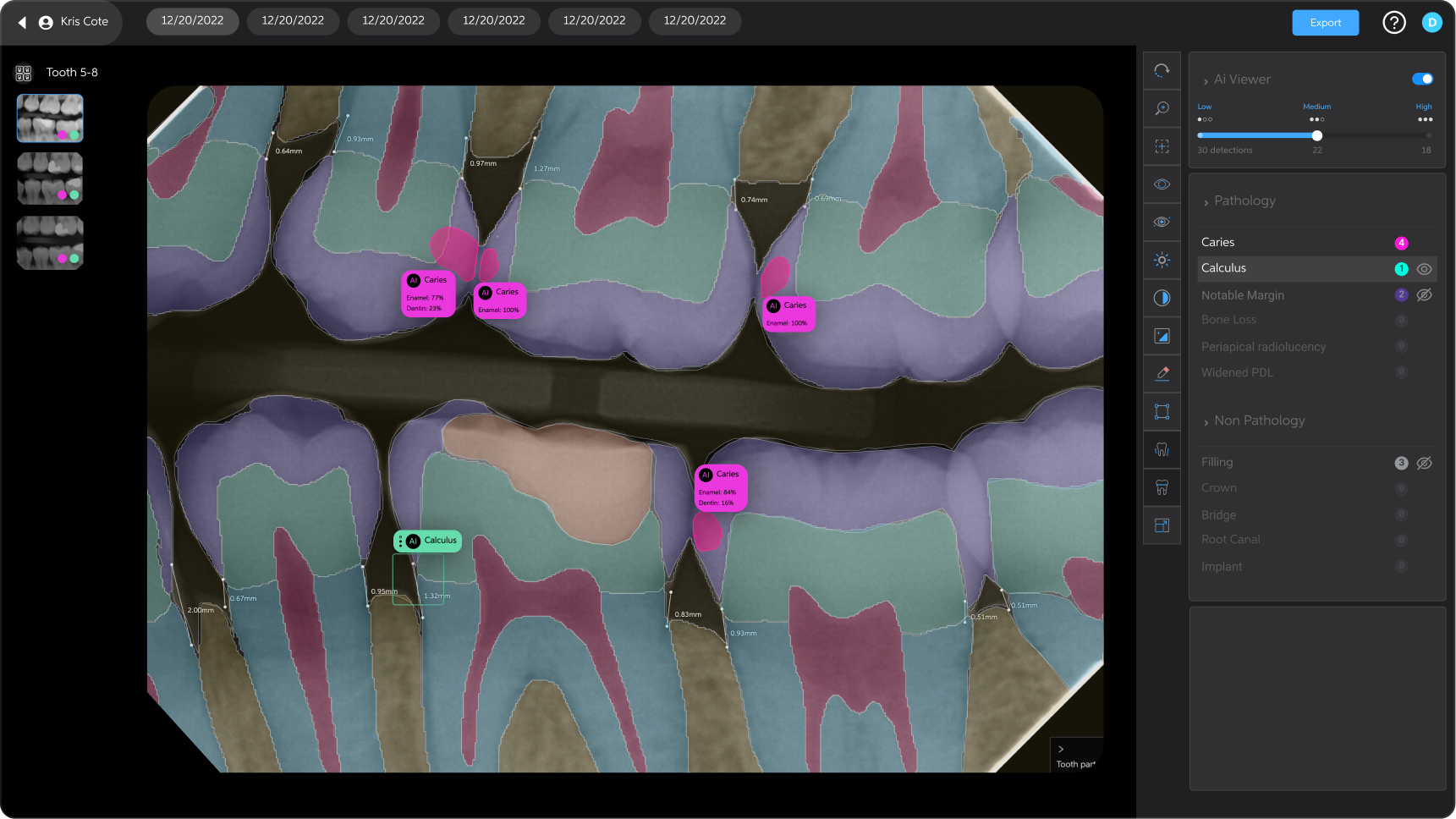
AI in dentistry is proving particularly effective at detecting conditions that can be challenging for the human eye to identify. A study published by PMC.ncbi.nlm.nih.gov demonstrated the potential of AI as a diagnostic aid, highlighting its ability to assist in identifying various dental anomalies. One key area is the detection of early-stage caries – those tiny cavities that often go unnoticed during routine exams.
Beyond cavities, AI is becoming adept at identifying periapical lesions, which are infections at the root of the tooth. These can be subtle on X-rays, but AI algorithms can be trained to recognize the telltale signs. Similarly, AI can assess bone loss around dental implants with remarkable precision, helping dentists monitor the stability of these restorations. This is crucial for long-term implant success.
Perhaps one of the most promising applications is in the early detection of oral cancer. AI can analyze images for subtle changes in tissue texture and color that might indicate the presence of cancerous or precancerous lesions. While not a replacement for a biopsy, it can help dentists prioritize patients who require further investigation. It's important to remember that AI isn't infallible, but it can flag areas of concern that might otherwise be overlooked.
The ability to analyze root canal systems is another area where AI excels. It can detect anomalies in the shape and curvature of the canals, helping endodontists plan treatment more effectively. Companies like Overjet are at the forefront of this technology, using AI to analyze dental radiography and provide dentists with detailed reports. However, it’s important to understand AI is a tool to support, not replace, the dentist’s clinical judgement.
- Early-stage caries (cavities)
- Periapical lesions
- Bone loss around implants
- Oral cancer indicators
- Anomalies in root canal systems
Common Conditions Detected by AI
- Caries (Tooth Decay) - Early detection of cavities, even those not visible to the naked eye, allows for minimally invasive treatment like fluoride application or small fillings, preventing the need for root canals or extractions later.
- Periapical Lesions - These are areas of infection around the root of the tooth, often caused by untreated decay or trauma; identifying them early allows for timely root canal treatment or extraction to prevent the spread of infection.
- Bone Loss (Periodontitis) - AI can precisely measure bone levels around teeth, indicating the presence and severity of periodontal disease; early intervention with scaling and root planing can help prevent tooth loss.
- Oral Cancer Indicators - AI algorithms are being developed to identify subtle changes in soft tissues visible on X-rays that could be indicative of oral cancer, enabling earlier biopsies and improved treatment outcomes.
- Impacted Teeth - AI can accurately assess the position of impacted teeth, such as wisdom teeth, and predict potential complications; this allows dentists to plan appropriate treatment, whether it's monitoring or surgical removal.
- Root Fractures - Detecting subtle root fractures can be challenging, but AI can highlight these areas on X-rays, guiding treatment decisions to save the tooth whenever possible.
- Resorption - AI can identify internal or external root resorption, a process where the tooth structure is lost; early detection allows for monitoring or intervention to prevent tooth weakening or loss.
Overjet and mydentist: A Real-World Example
The partnership between mydentist and Overjet is a significant development in the adoption of AI-powered dental diagnostics in the UK. It represents one of the largest rollouts of this technology in the country, according to reports from the-probe.co.uk and linkedin.com. Overjet's AI platform is being integrated into mydentist practices to analyze dental X-rays and help dentists detect and diagnose conditions more accurately.
For a patient, this integration might not be immediately visible. However, it means that their X-rays are being reviewed by both a dentist and an AI algorithm. The AI provides a second opinion, highlighting potential areas of concern that the dentist can then investigate further. This can lead to faster and more accurate diagnoses, particularly for subtle conditions that might otherwise be missed.
mydentist is claiming increased accuracy and efficiency as a result of this partnership. The AI can help reduce the time it takes to review X-rays, allowing dentists to focus more on patient care. It also provides a consistent and objective assessment, reducing the potential for human error. While specific numbers on improved accuracy haven't been widely published, the potential benefits are clear.
This collaboration demonstrates a commitment to adopting cutting-edge technology to improve the quality of dental care. It’s a practical example of how AI is moving from the research lab into real-world dental practices, potentially benefiting patients across the UK. It’s a promising step, and one we’ll likely see replicated by other dental groups in the coming years.
Accuracy and Limitations: What to Expect
While AI-powered dental diagnostics hold immense promise, it's crucial to have realistic expectations about their current capabilities. These systems are not perfect, and they are not a replacement for the expertise of a qualified dentist. Error rates do exist, and the accuracy of AI algorithms can vary depending on the quality of the images and the complexity of the condition being assessed.
AI algorithms can sometimes struggle with images that are blurry, poorly exposed, or contain artifacts. They may also have difficulty detecting subtle anomalies in certain types of patients, such as those with unusual anatomy or complex medical histories. The PMC study highlighted the need for continuous training and refinement of AI algorithms to improve their accuracy.
Human oversight is absolutely essential. Dentists need to review the AI's findings, interpret them in the context of the patient's overall health, and make the final diagnosis. AI should be seen as a tool to assist dentists, not to replace them. It’s about augmenting their skills and improving their decision-making process.
The ongoing development and improvement of AI algorithms are critical. As more data becomes available and algorithms become more sophisticated, we can expect to see even greater accuracy and reliability. But for now, it's important to remember that AI is a powerful tool, but it's not a magic bullet.
Finding AI-Enabled Dental Care Near You
If you're interested in receiving dental care from a practice that utilizes AI-powered diagnostics, the first step is to ask your current dentist. Inquire whether they are using AI tools and, if so, what specific applications they are employing. Don't hesitate to ask about the benefits and limitations of these technologies.
Currently, there aren't widespread certifications or standards specifically for AI-enabled dental practices. However, you can look for practices that are actively investing in advanced technology and promoting their commitment to innovation. Many practices will highlight their use of AI on their websites or in their marketing materials. At Meet My Dentist, we are actively exploring ways to integrate this information into our search filters, allowing you to easily find dentists who are using AI.
Be prepared for the possibility of increased costs. AI-powered diagnostics often require an investment in specialized software and hardware, which may be reflected in the price of your dental care. Discuss pricing with your dentist and check with your insurance provider to see if AI-assisted diagnostics are covered. It is important to understand that the initial cost may be offset by the benefits of early detection and preventative care.
Don't be afraid to shop around and compare different practices. Ask questions, read reviews, and choose a dentist who you feel comfortable with and who is committed to providing you with the best possible care. Remember, AI is just one piece of the puzzle. The most important factor is finding a skilled and compassionate dentist.
The Cost of Advanced Diagnostics
The integration of AI into dental practices naturally raises the question of cost. It’s likely that AI-powered diagnostics will, at least initially, be more expensive than traditional methods. This is due to the initial investment in software, hardware, and training for dental staff. However, determining a precise cost increase for patients is difficult as pricing varies significantly between practices and regions.
Insurance coverage for AI-assisted diagnostics is still evolving. Some insurance providers may cover these procedures, while others may not. It's crucial to check with your insurance company to understand your coverage. As AI becomes more commonplace, we can anticipate that insurance policies will adapt to include coverage for these technologies.
The potential for long-term savings through early detection shouldn’t be overlooked. Identifying and treating dental problems in their early stages can often prevent the need for more extensive – and expensive – procedures down the line. In this sense, AI could actually save you money in the long run. It's a balance between upfront cost and potential future savings.
Future Trends: What's on the Horizon
Looking ahead to 2026 and beyond, the future of AI in dentistry is incredibly exciting. We can expect to see the development of even more sophisticated algorithms that can detect a wider range of conditions with greater accuracy. One area of focus is personalized dentistry, where AI is used to tailor treatment plans to the individual patient's needs and risk factors.
Integration with teledentistry is another promising trend. AI can be used to analyze images and data remotely, allowing dentists to provide virtual consultations and monitor patients' oral health from a distance. This could be particularly beneficial for patients in rural areas or those with limited access to dental care.
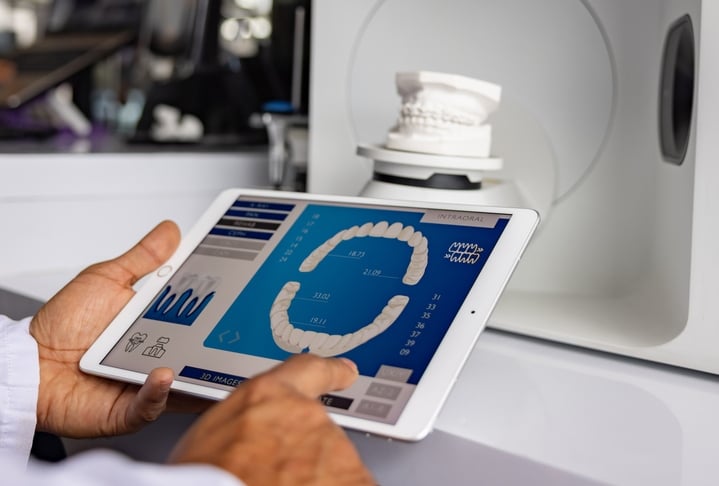
Advancements in image analysis are also on the horizon. We may see the development of AI algorithms that can analyze 3D images of the mouth with greater precision, providing dentists with a more comprehensive understanding of the patient's oral health. There's also potential for AI to assist with risk assessment, predicting which patients are most likely to develop certain conditions.
While it’s difficult to predict the future with certainty, it’s clear that AI will continue to play an increasingly important role in dentistry. It’s a technology with the potential to transform the way we diagnose, treat, and prevent oral diseases.
Top AI-Powered Dental Tools for Practices
Several AI-powered dental tools are currently available to help practices improve their diagnostics and efficiency. One of the leading solutions is Overjet, which we’ve already discussed. It specializes in analyzing dental radiographs and providing dentists with detailed reports on potential issues. Their platform aims to improve diagnostic accuracy and speed up the review process.
Another notable tool is Pearl, an AI-powered platform that assists with various aspects of dental diagnosis, including caries detection and periodontal disease assessment. Pearl uses computer vision to analyze images and identify potential problems. They also offer a teledentistry solution that allows dentists to provide remote consultations.
Diagnocat is another player in the AI dental space, offering solutions for caries detection, periodontal assessment, and other diagnostic tasks. They focus on providing accurate and reliable results to help dentists make informed treatment decisions. While less widely known than Overjet or Pearl, Diagnocat is gaining traction in the industry.
Beyond diagnostic tools, AI is also being used to improve practice management and patient communication. Tools like Solutionreach use AI-powered chatbots to automate appointment scheduling, send reminders, and answer patient questions. This can free up staff time and improve patient satisfaction. These tools are constantly evolving, and the landscape is likely to become even more competitive in the coming years.
- Overjet: AI-powered radiography analysis for improved diagnostics.
- Pearl: Comprehensive AI platform for caries detection, periodontal assessment, and teledentistry.
- Diagnocat: AI solutions for caries detection, periodontal assessment, and other diagnostic tasks.
- Solutionreach: AI-powered chatbots for practice management and patient communication.
Featured Products

Enhances diagnostic accuracy and efficiency, making advanced dental care more accessible.

Enhances diagnostic accuracy and efficiency, making advanced dental care more accessible.

Enhances diagnostic accuracy and efficiency, making advanced dental care more accessible.

Enhances diagnostic accuracy and efficiency, making advanced dental care more accessible.
As an Amazon Associate I earn from qualifying purchases. Prices may vary.


No comments yet. Be the first to share your thoughts!